
We gave everything according to the brief. But clients always have their own picture in their head.
Which raises a fair question: if the client already has a vision, why not just execute it themselves?
Because having a vision and being able to execute it are two different things. And beyond that, the POV and experience an agency brings can help turn a client's objective into something far more effective. That's where we come in.
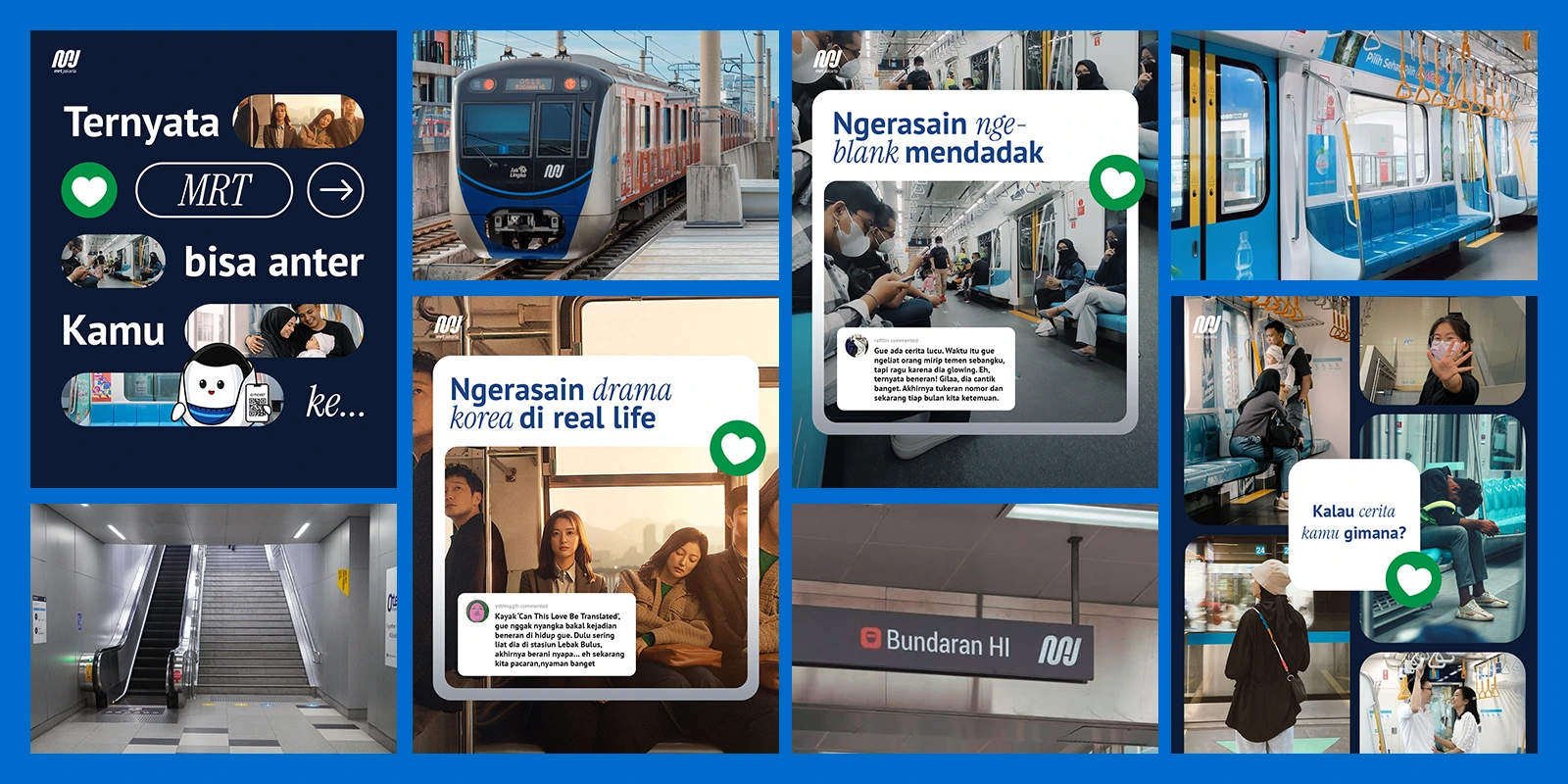
That's exactly what we felt when pitching to MRT Jakarta in April 2026. Elephant House received a tender invitation for a social media project — plus designing a campaign strategy for MRT Jakarta's public communications. But the first question that came up in the team wasn't "what content would be cool?" It was: "who actually rides the MRT every day?" And answering that turned out to be a lot harder than just riding from Lebak Bulus to Bundaran HI.
MRT Represents Jakarta's Diversity — So Who Are We Really Talking To?
It started with research. Then more research. Then more research after that. And what we found was genuinely interesting. Jakarta is a metropolitan city, so its residents carry vastly different life contexts. Some ride for time efficiency. Some because it's already part of their urban daily routine. Some just want to create memories with their family.
From all that research, we started grouping people — not just by age range or profession, but by motivation and moment. Why are they there? What are they feeling? What kind of content would actually make them stop scrolling?
The answers formed three groups: Routine-Driven Commuters who need fresh content in the middle of packed days; Lifestyle Seekers who want to stay relevant and up to date; and Families looking for more meaningful moments together.
Once you know the people that deeply, that's when you can start building communication that actually connects.
Making #UbahJakarta More Personal
#UbahJakarta has been around since 2019 — a campaign that successfully got a lot of people to switch to public transport. But the longer it ran, the more we noticed a gap. The message was strong, but the hashtag had become a little too familiar, a little too distant from the everyday reality of today's MRT riders.
That gap shaped an insight: every person has their own reason for riding the MRT — some for efficiency, some to live a more organised life, some for quality time with family without having to drive. So, the message had to connect on a personal level instead of promoting a mass movement — #UbahJakartaUntuk, more "Untuk siapa? Untuk apa? Untuk situasi apa?" That one word — "Untuk" — became the key to the entire communication direction.
And from there, everything fell into place. Same dish. But this time, we knew our guest didn't like spicy food.
Have a project or brief on your mind? Let's talk — coffee's on us, stories are on you.